Healthy, mature trees add beauty, shade, value, and character to any property. However, even the strongest trees can develop structural weaknesses over time because of storms, aging, disease, or rapid growth. When a tree begins to show signs of instability, many property owners assume removal is the only option. Fortunately, that is not always true. Modern tree care techniques like tree cabling and tree bracing can help preserve valuable trees while reducing safety risks. Although these methods are often mentioned together, they serve different purposes and solve different structural problems. Understanding how each system works allows homeowners to make informed decisions before minor issues become expensive emergencies. In this guide, you’ll discover the differences, benefits, installation process, maintenance requirements, and expert recommendations for choosing the best structural support solution for your trees.
Understanding Why Trees Need Structural Support
Trees naturally develop strong trunks and branches, but they are constantly exposed to environmental stress. High winds, ice storms, heavy snowfall, lightning strikes, poor pruning, and even fast-growing limbs can weaken their structure over time. While some trees naturally compensate for these conditions, others become vulnerable to splitting or branch failure.
Tree support systems are designed to strengthen weak areas before they become hazardous. Instead of removing a mature tree that still contributes beauty and environmental value, arborists often recommend structural support to improve stability and extend its lifespan. This proactive approach protects nearby buildings, vehicles, utility lines, and people while preserving the health of the landscape.
Many ornamental and large shade trees benefit from these support systems because they frequently develop multiple trunks or wide-spreading limbs. Species with brittle wood are particularly susceptible to structural damage. By identifying weaknesses early, certified arborists can install support systems that reduce stress without restricting healthy growth.
Another important advantage is long-term tree preservation. Mature trees require decades to replace, making preventive care a worthwhile investment. Structural support allows trees to continue growing naturally while minimizing the chances of catastrophic failure during severe weather.
What Is Tree Cabling?
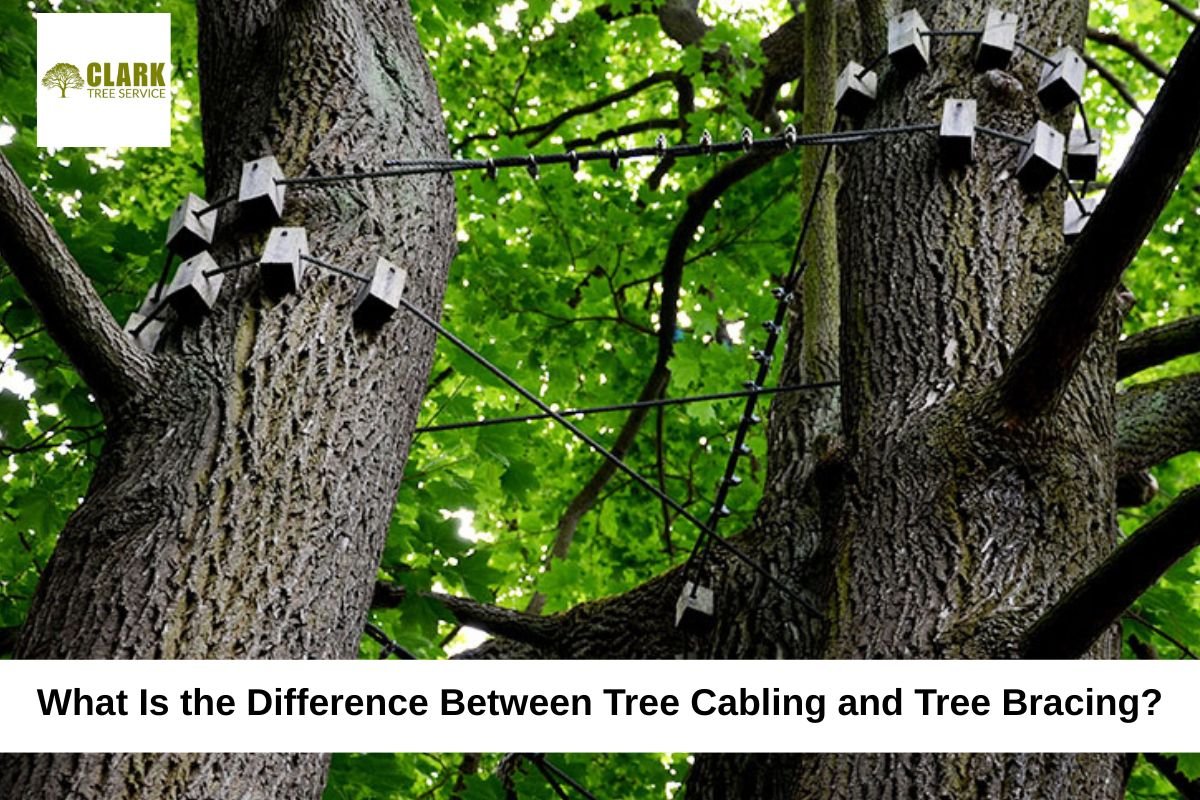
Tree cabling is a structural support technique that uses flexible, high-strength steel cables to connect major branches or leaders within a tree’s canopy. These cables help distribute mechanical stress more evenly, reducing movement during strong winds and storms.
Unlike rigid support methods, tree cabling allows natural branch movement while preventing excessive swaying that could lead to splitting. Professional arborists typically install cables high in the canopy between strong limbs. This placement helps support weak branch unions without interfering with normal growth patterns.
Dynamic and static cabling systems are commonly used depending on the tree’s condition. Dynamic systems allow more flexibility, while static systems provide greater stabilization for severely weakened trees. Selecting the right option requires evaluating the tree’s species, age, size, and structural integrity.
Tree cabling works especially well for trees with co-dominant stems, V-shaped branch unions, long heavy limbs, or valuable heritage trees. Rather than eliminating natural movement, it simply reduces dangerous stress levels during extreme weather conditions.
What Is Tree Bracing?
Tree bracing is another structural support method, but instead of flexible cables, it uses threaded steel rods installed directly through weak branch unions or cracked trunks. The primary purpose is to reinforce areas already showing signs of structural failure.
When a tree develops internal cracks or begins splitting, simple cabling alone may not provide enough strength. Bracing rods stabilize damaged sections by holding them together, preventing cracks from spreading further. This reinforcement creates additional structural integrity while allowing the tree to continue healing.
Bracing is commonly recommended for trees suffering from storm damage, partially split trunks, weak branch attachments, or severe decay around structural unions. The rods act like internal reinforcements that strengthen compromised wood fibers.
Unlike cabling, which mainly reduces movement, bracing physically strengthens weak attachment points. In many situations, professional arborists combine bracing with cabling to create a complete structural support system that offers maximum protection.
Tree Cabling vs. Tree Bracing: Understanding the Key Differences
Although both methods improve tree stability, their purposes differ significantly. Understanding these differences helps property owners choose the right treatment based on the tree’s condition rather than guessing.
Tree cabling primarily reduces movement between large branches. It acts as a preventive measure by limiting excessive sway before structural damage occurs. Bracing, however, addresses existing structural weaknesses by reinforcing cracked or split areas with steel rods.
Another distinction involves installation. Cabling is installed around branches within the canopy using specialized hardware, while bracing requires carefully drilling through weakened trunks or branch unions to insert threaded rods. Because of this invasive installation process, bracing should only be performed by trained professionals.
The flexibility also differs. Cabling allows branches to move naturally during wind events while reducing stress. Bracing creates rigid reinforcement that prevents damaged areas from separating further. In many cases, arborists recommend combining both systems for trees with advanced structural concerns.
Ultimately, the decision depends on the tree’s overall health, structural defects, and future risk assessment rather than simply choosing one option over the other.
Signs Your Tree May Need Cabling or Bracing
Recognizing early warning signs can prevent serious accidents and costly property damage. While trees often appear healthy from the outside, hidden structural weaknesses may already exist beneath the bark.
One common warning sign is the presence of multiple trunks growing closely together. These co-dominant stems frequently develop weak unions that become vulnerable during storms. Large horizontal branches extending far from the trunk also experience increased leverage, making them candidates for support systems.
Visible cracks, bark separation, leaning trunks, storm damage, or previously broken limbs indicate that professional evaluation should occur immediately. Trees growing near homes, sidewalks, driveways, or power lines deserve particular attention because structural failure could have severe consequences.
Deadwood accumulation, fungal growth around the trunk, hollow cavities, and uneven canopy weight are additional indicators that the tree may require support. A certified arborist can perform a thorough tree risk assessment to determine whether cabling, bracing, pruning, or another treatment provides the safest solution.
Benefits of Tree Cabling and Tree Bracing
One of the greatest benefits of structural support systems is preserving mature trees that might otherwise require removal. Healthy mature trees increase property value, improve curb appeal, provide wildlife habitat, reduce energy costs through shade, and enhance environmental sustainability.
These support systems also improve public safety. By reducing the likelihood of branch or trunk failure, homeowners minimize risks to family members, neighbors, vehicles, and nearby structures. Preventive care often costs far less than repairing damage caused by fallen trees.
Another advantage involves extending the lifespan of valuable landscape trees. Properly installed support systems allow weakened trees to continue healthy growth for many additional years. Combined with routine pruning and inspections, cabling and bracing contribute to long-term tree health management.
Additionally, these techniques preserve historic and sentimental trees that hold significant emotional or environmental value. Rather than removing a cherished tree, structural support offers an effective alternative that balances safety with preservation.
Professional Installation and Ongoing Maintenance Matter
Tree cabling and bracing are not do-it-yourself projects. Proper installation requires extensive knowledge of tree biology, structural mechanics, growth patterns, and load distribution. Incorrect placement can cause additional stress instead of improving stability.
Certified arborists carefully inspect the tree before selecting support hardware. They evaluate species characteristics, wood strength, branch angles, decay, canopy weight, and environmental conditions. This assessment ensures the support system addresses the actual structural problem rather than simply treating visible symptoms.
Maintenance is equally important. Trees continue growing, meaning support systems require periodic inspection and adjustment. Hardware should be checked every few years to ensure cables remain properly tensioned and rods remain secure without restricting healthy growth.
Regular pruning also complements structural support by reducing excess canopy weight and eliminating dead or damaged limbs. Together, these services create a comprehensive tree care plan that promotes long-term health and stability.
How to Choose the Right Solution for Your Tree
Choosing between tree cabling and tree bracing should never rely on assumptions. Every tree is unique, and factors such as species, age, location, health, structural condition, and surrounding property all influence the recommendation.
If a tree has weak branch attachments but no significant cracking, cabling may provide sufficient preventive support. However, when visible cracks or split trunks exist, bracing often becomes necessary. Many mature trees benefit from both systems working together for maximum reinforcement.
Working with an experienced arborist ensures the correct diagnosis. Instead of recommending unnecessary removal, qualified professionals focus on preserving healthy trees whenever possible. Their expertise helps property owners invest in solutions that improve both safety and tree longevity.
Routine inspections are also valuable because structural issues become easier and less expensive to address when detected early. Preventive tree care reduces emergency situations and keeps landscapes healthy throughout every season.
Common Misconceptions About Tree Cabling and Bracing
Many homeowners believe installing cables or braces permanently fixes every structural issue. In reality, these systems reduce risk but do not eliminate the need for ongoing inspections, pruning, and maintenance.
Another misconception is that any damaged tree can be saved with support systems. Trees suffering from severe decay, extensive root damage, or advanced disease may still require removal because structural reinforcement cannot restore compromised wood strength.
Some property owners also assume tree cabling harms healthy trees. When installed correctly by certified arborists, modern support systems are designed to minimize injury while supporting natural growth. Proper hardware selection and placement significantly reduce long-term impact.
Finally, many believe structural support is only necessary after storm damage occurs. Preventive installation often provides the greatest benefit because it reduces stress before major failures develop. Early intervention remains one of the smartest investments in professional tree care.
Wrap-Up
Tree cabling and tree bracing share the common goal of protecting valuable trees, but they accomplish that goal in different ways. Cabling reduces excessive movement between major branches, while bracing reinforces weakened or cracked structural unions using steel rods. Choosing the right solution depends on the tree’s health, structural condition, and long-term stability. With proper evaluation by a certified arborist, these support systems can extend the life of mature trees, improve safety, and preserve the beauty of your landscape. Regular inspections, preventive maintenance, and timely structural support help homeowners avoid costly damage while protecting one of their property’s most valuable natural assets. Investing in professional tree care today ensures healthier, safer, and stronger trees for many years to come.
Frequently Asked Questions
1. Can tree cabling save a damaged tree?
Yes. Tree cabling can help preserve structurally weak trees by reducing stress on vulnerable branches. However, its effectiveness depends on the tree’s overall health and should be determined by a certified arborist.
2. Is tree bracing better than tree cabling?
Neither method is universally better. Cabling prevents excessive branch movement, while bracing strengthens cracked or weakened areas. Many trees benefit from using both systems together.
3. How long do tree cabling systems last?
Professionally installed tree cabling systems can last many years, but they require periodic inspections and maintenance to ensure continued safety and effectiveness.
4. How often should supported trees be inspected?
Most arborists recommend inspecting trees with cabling or bracing every one to three years and after major storms to ensure the support system remains secure and effective.