
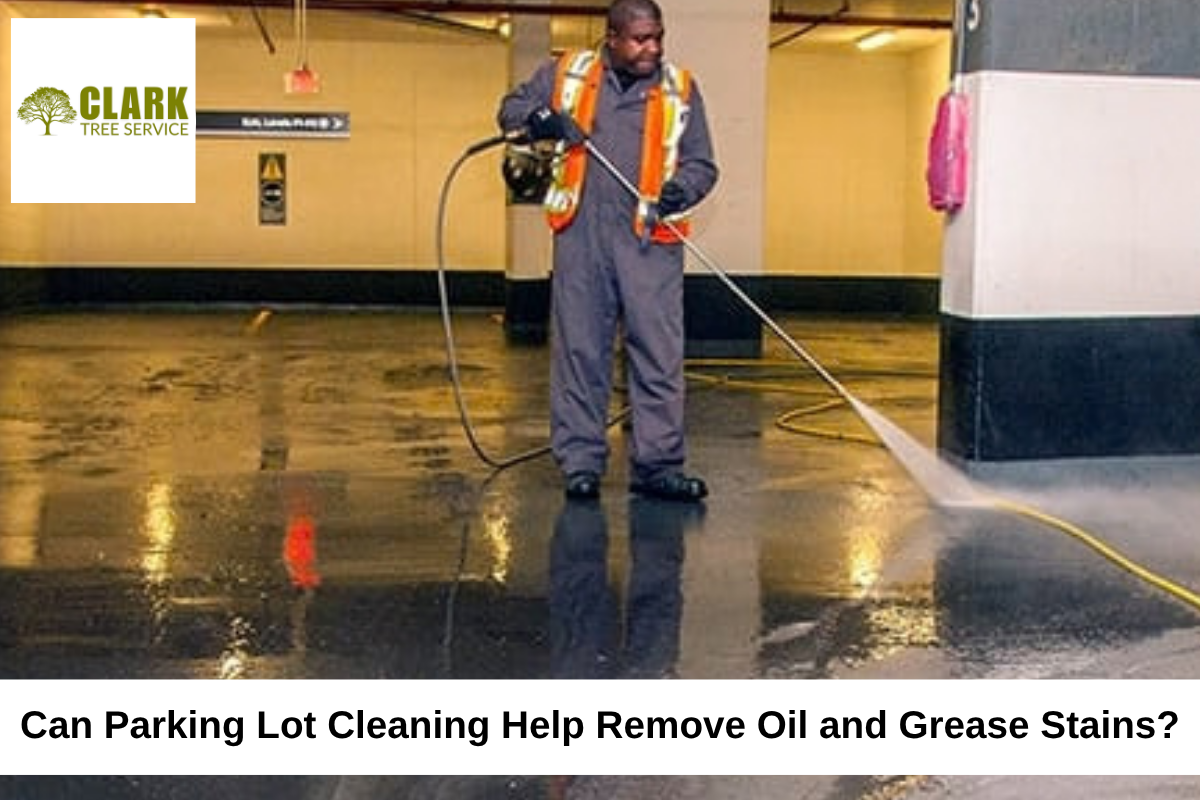
Oil spots are common in parking lots, especially around busy entrances, parking spaces, loading areas, and drive lanes. Vehicle leaks can leave dark, greasy marks that become harder to remove when they sit on asphalt or concrete for a long time.
Professional parking lot cleaning can help remove many oil and grease stains by combining surface cleaning, appropriate degreasers, agitation, and pressure washing. However, very old or deeply absorbed stains may require repeated treatment rather than one cleaning session.
What Is Parking Lot Cleaning and Can It Remove Oil Stains?
Parking lot cleaning is more than simply spraying water across the pavement. A professional service can use sweeping, surface cleaning, pressure washing, and targeted stain treatment to remove dirt, tire residue, oil, grease, and other buildup.
For oil and grease, hot water and an alkaline or commercial degreaser can improve cleaning results. Heat helps loosen oily contamination while the cleaning solution helps emulsify it so it can be removed from the pavement.
The type and age of the pavement also matter. Concrete is porous, so oil can penetrate below the surface. Asphalt can also retain petroleum-based contamination, making older stains more difficult to eliminate.
7 Key Features of Professional Parking Lot Cleaning
1. Oil and Grease Treatment
Targeted degreasers can break down stubborn oil and grease before pressure washing, instead of simply moving the residue around.
2. Hot-Water Pressure Washing
Hot water can be particularly useful for grease and oil because heat helps loosen oily contamination from hard surfaces.
3. Surface Cleaner Equipment
Professional surface cleaners provide more consistent coverage across large pavement areas and help reduce visible cleaning lines.
4. Fresh Spill Response
Fresh oil is generally easier to address than old, cured staining. Quick absorbent cleanup can reduce how much contamination reaches the pavement.
5. Tire Mark and Grime Removal
Parking lot cleaning can also address tire marks, dirt, grease buildup, gum, and other surface contaminants.
6. Improved Property Appearance
Removing dark oil spots can make parking areas look cleaner and more professionally maintained, which matters for businesses, offices, apartments, and retail properties.
7. Wastewater Management
Professional cleaning should account for wastewater and local runoff requirements. Oil-containing wash water should not simply be allowed to enter storm drains.
How to Remove Oil and Grease Stains From a Parking Lot
A typical professional process may include:
- Inspect the surface to determine whether it is asphalt or concrete and assess the stain’s severity.
- Remove loose dirt and debris through sweeping or other suitable methods.
- Apply an appropriate degreaser directly to heavily contaminated areas.
- Allow sufficient dwell time so the cleaning solution can work on the oil.
- Agitate stubborn areas where necessary.
- Pressure wash or surface clean the pavement using equipment suitable for the surface.
- Recover and dispose of wastewater properly according to applicable requirements.
Heavily embedded stains may need more than one treatment. Complete removal is not always possible when petroleum contamination has penetrated deeply into the pavement.
How to Get Better Oil-Stain Removal Results
Do not wait too long after an oil spill. Fresh contamination is usually easier to address than stains that have remained for months or years.
For property managers, regular parking lot cleaning can also prevent oil, grease, dirt, and other contaminants from accumulating into a larger maintenance problem. A professional inspection can help determine whether cleaning alone is enough or whether you need additional pavement maintenance.
My Personal Experience With Parking Lot Cleaning
In practice, the biggest difference comes from treating the stain rather than simply washing the pavement. A pressure washer may improve the appearance of a fresh mark, but older oil often needs degreaser, dwell time, agitation, and another cleaning pass.
I would also check the pavement before choosing the cleaning method. Asphalt and concrete respond differently, and excessive pressure or unsuitable chemicals can create unnecessary surface problems.
Pros and Cons
Pros
- Helps remove visible oil and grease buildup
- Improves parking lot appearance
- Can address tire marks and accumulated grime
- Helps maintain high-traffic areas
- Suitable for commercial properties when properly planned
Cons
- Deep stains may not disappear completely
- Older contamination may require repeated treatments
- Professional cleaning requires specialized equipment
- Wastewater must be handled responsibly
Conclusion
So, can parking lot cleaning help remove oil and grease stains? Yes. Professional cleaning can significantly improve many oil-stained parking areas when the correct combination of degreaser, heat, pressure, agitation, and surface-cleaning equipment is used.
The key is to treat oil stains early and choose a cleaning method based on the pavement and contamination level. For severe or recurring stains, professional parking lot cleaning can provide a more thorough and consistent solution.
Top 4 FAQs
Can pressure washing remove oil stains from a parking lot?
Yes. Pressure washing can remove many oil stains, especially when combined with an appropriate degreaser and, where suitable, hot water.
Does parking lot cleaning remove old oil stains?
It can significantly reduce old stains, but deeply absorbed or cured oil may require multiple treatments and may not disappear completely.
Is hot water better for grease stains?
Hot water can improve oil and grease removal because heat helps loosen oily contamination and works well with suitable cleaning chemicals.
How often should a commercial parking lot be cleaned?
The ideal schedule depends on traffic, vehicle activity, weather, and contamination. High-traffic properties may benefit from more frequent cleaning and prompt treatment of oil spills.