
A mature tree can develop weak branch unions, co-dominant stems, cracks, or heavy limbs that become more vulnerable during strong winds and storms. Tree cabling and bracing services provide supplemental structural support that can limit movement and reduce the chance of certain branch or stem failures. These services aren’t just about keeping a damaged tree standing. When properly assessed and installed, cabling and bracing can help preserve valuable trees, reduce potential property damage, and manage specific structural weaknesses. However, the right solution depends on the tree’s condition, defect, location, and risk.
What Are Tree Cabling and Bracing Services?
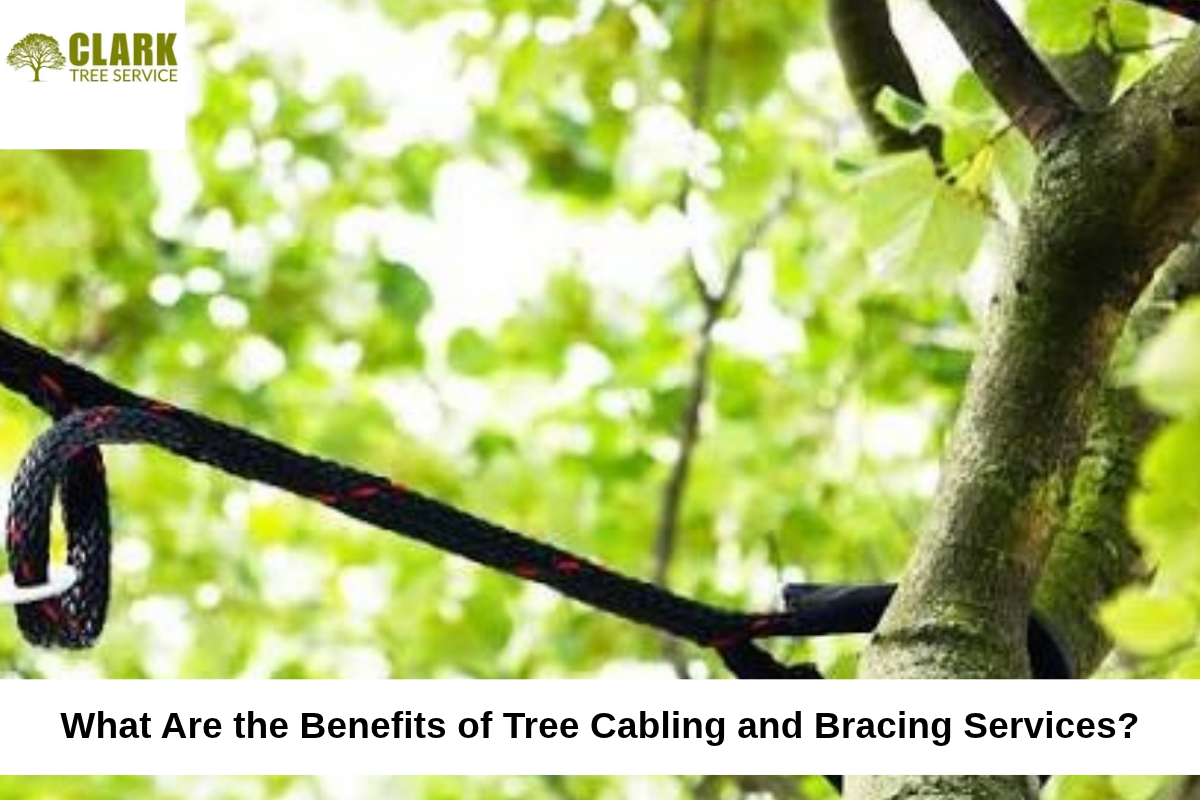
Tree cabling uses flexible support cables between selected branches or stems to limit excessive movement. Tree bracing uses rigid rods through a weak union to provide additional structural support. Arborists may use one system or both depending on the problem.
Importantly, cabling and bracing do not cure decay or make every hazardous tree safe. A professional assessment should come before installation to determine whether the tree is suitable for supplemental support.
7 Key Benefits of Tree Cabling and Bracing
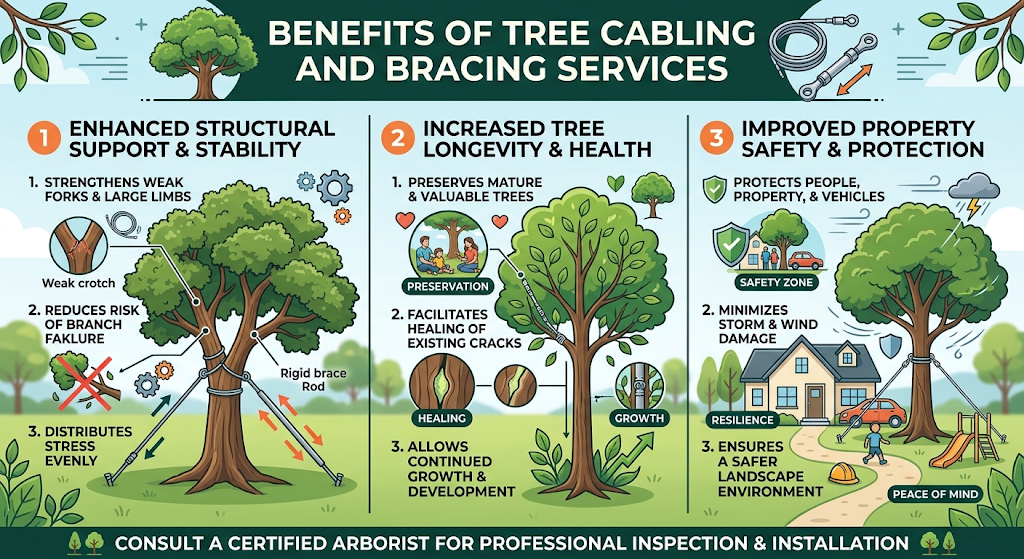
1. Helps Reduce Structural Failure Risk
Support systems can limit excessive movement in weak unions and help reduce the likelihood of certain branches or stems separating during wind or heavy weather.
2. Protects Your Property
A supported tree may have a lower risk of structural failure in the treated area, helping reduce potential damage to roofs, vehicles, fences, and outdoor spaces.
3. Preserves Valuable Mature Trees
When a tree is otherwise healthy and worth retaining, structural support can sometimes provide an alternative to immediate removal.
4. Supports Weak Branch Unions
Cabling is commonly considered for co-dominant stems and weak branch unions, especially where excessive movement could place additional stress on the connection.
5. Helps Manage Storm Stress
Wind, ice, snow, and heavy rain can place significant loads on tree structures. Properly designed support systems can help limit movement in vulnerable areas.
6. Works With Other Tree-Care Methods
Cabling and bracing may be combined with appropriate pruning or other structural-management techniques when an arborist determines that reducing canopy weight or movement is useful.
7. Extends the Useful Life of a Tree
For suitable trees, supplemental support can help manage a known structural weakness and allow the tree to remain part of the landscape for longer.
When Should You Consider Tree Cabling and Bracing?
Look for warning signs such as V-shaped branch unions, co-dominant stems, visible cracks, splitting, unusually heavy limbs, or branches with excessive movement. These signs do not automatically mean cabling is required.
A qualified arborist should inspect the tree, identify the actual defect, consider what could be damaged if the tree fails, and determine whether cabling, bracing, pruning, monitoring, or removal is the appropriate option.
How Does Tree Cabling Differ From Bracing?
Cabling generally works higher in the canopy to limit movement between stems or branches. Bracing uses rigid rods closer to a weak or compromised union to provide direct reinforcement. In some cases, both systems are used together because they address different types of structural stress.
What Should You Expect From Professional Tree Cabling Services?
A professional service should begin with an inspection rather than immediately installing hardware. The arborist should evaluate the tree’s structure, health, defects, surrounding targets, and support requirements.
Installation should use appropriate hardware and follow recognized arboricultural practices. The International Society of Arboriculture (ISA) publishes Best Management Practices for tree support systems covering cabling, bracing, guying, and related support methods.
How Long Does Tree Cabling Last?
The service life depends on the system, materials, installation, tree growth, and environmental conditions. More importantly, installed hardware should not be treated as “set and forget.” Regular inspection is important because trees continue growing and support hardware can require adjustment, maintenance, or replacement.
Pros and Cons of Tree Cabling and Bracing
Pros
- Helps manage specific structural weaknesses
- Can preserve suitable mature trees
- May reduce movement in vulnerable unions
- Can complement professional pruning
- Provides an alternative to immediate removal in selected cases
Cons
- Does not eliminate all tree-failure risk
- Does not repair decay or restore damaged wood
- Requires professional assessment and installation
- Requires periodic inspection
- Not appropriate for every damaged or hazardous tree
My Professional Insight
One important point homeowners often miss is that more hardware does not automatically mean more safety. The goal is to address a specific structural problem with the right support system, not simply add cables to a weak-looking tree. A proper assessment should always come before installation.
Conclusion
Tree cabling and bracing can be valuable tools for managing certain structural problems in mature trees. They can limit movement, support weak unions, protect valuable landscape trees, and help manage storm-related stress. However, these systems are supplemental support, not a cure for every tree defect. The safest approach is to have a qualified arborist inspect the tree and recommend the appropriate treatment based on its condition and surroundings.
FAQs
Is tree cabling worth it?
For a healthy, valuable tree with a manageable structural weakness, professional cabling may help reduce movement and preserve the tree. The decision should follow an arborist assessment.
Does tree bracing prevent a tree from splitting?
Bracing rods can reinforce certain weak or compromised unions and help limit further separation, but they cannot guarantee that a tree will never split.
Can I install tree cables myself?
DIY installation is risky because cable location, tension, hardware, and working at height all require appropriate knowledge. Professional assessment and installation are recommended.
How often should tree cabling be inspected?
Support systems should be inspected periodically because the tree continues to grow and hardware can deteriorate or become unsuitable. Your arborist can recommend an inspection schedule based on the tree and system.