Overgrown trees can quickly become more than a simple landscaping concern. Branches that extend toward roofs, power lines, driveways, or neighboring properties can create safety risks and cause costly damage if they are not managed properly. A tree may look healthy from the ground while hidden deadwood, weak branches, or excessive growth create problems that are difficult for a homeowner to spot.
Professional tree trimming can help control this growth while protecting the tree’s health and the surrounding property. Experienced crews know where to make cuts, which branches should be removed, and how much growth can safely be taken away. Understanding how the process works can help homeowners recognize when a tree needs attention and choose the right type of service.
What Makes a Tree Overgrown?
A tree becomes overgrown when its branches or foliage extend beyond a healthy and manageable shape. Fast-growing species may require regular maintenance, while trees that have been neglected for several years can develop dense canopies, crossing branches, and uneven growth.
Not every large tree is overgrown. Size alone does not mean a tree needs aggressive trimming. The more important questions are whether the growth is interfering with structures, creating weak branch connections, blocking visibility, or affecting the tree’s overall health.
Common Signs of an Overgrown Tree
Homeowners should watch for several warning signs:
Branches touching or rubbing against the roof.
Limbs growing close to electrical or communication lines.
Dead, broken, or hanging branches.
Branches blocking windows, signs, driveways, or roads.
Dense growth that prevents sunlight and air from reaching parts of the canopy.
Branches crossing or rubbing against each other.
Growth extending over a neighboring property.
These conditions do not always require immediate removal of large branches, but they are good reasons to have the tree inspected.
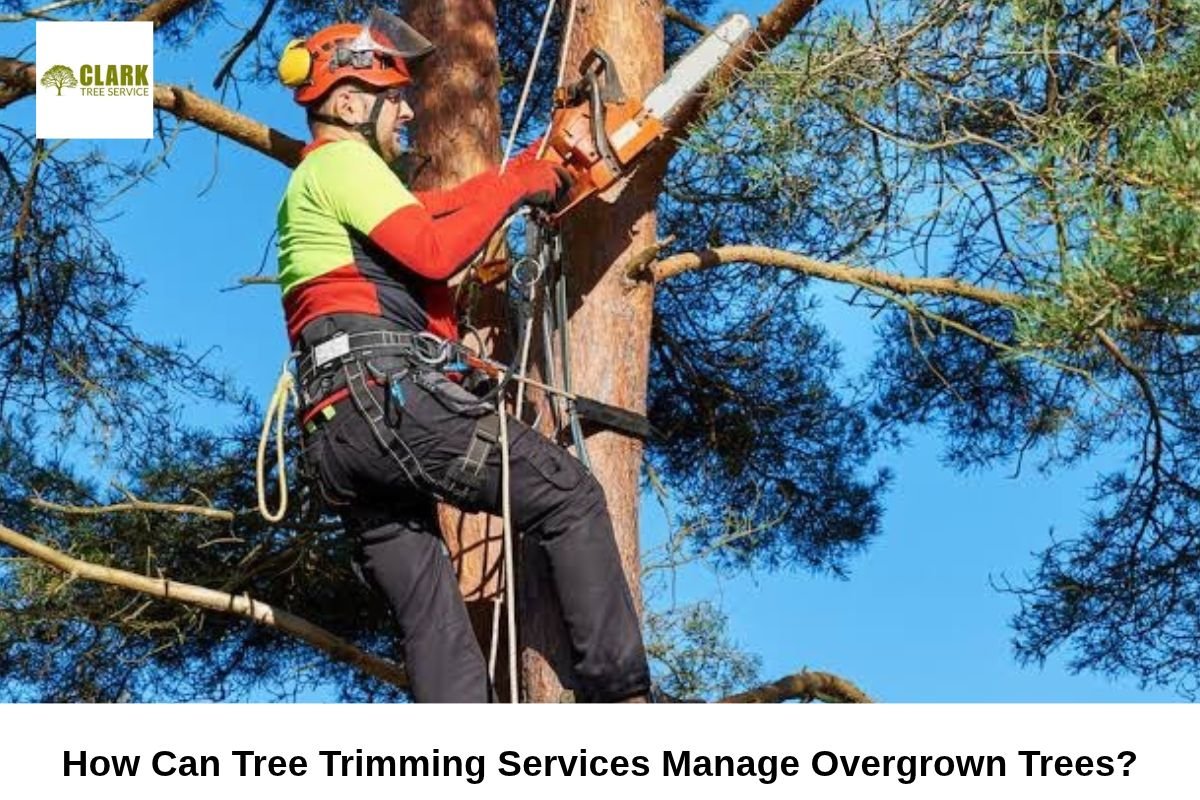
How Can Tree Trimming Services Manage Overgrown Trees?
Professional tree trimming involves more than cutting away the branches that look inconvenient. A trained tree professional first evaluates the tree’s species, size, structure, health, surrounding property, and potential hazards.
The goal is usually to remove selected branches while maintaining the tree’s natural structure. Cutting too much at once can weaken a tree, expose previously shaded bark to intense sunlight, and encourage undesirable growth.
Removing Dead and Damaged Branches
Deadwood is one of the first areas professionals may address. Dead branches can fall during strong winds or storms, particularly when they are large or located above areas where people or vehicles regularly pass.
Broken or damaged limbs may also create entry points for insects and disease. Removing them can reduce immediate hazards and help the remaining tree structure develop more normally.
Thinning Dense Areas
An extremely dense canopy can prevent adequate sunlight and air movement from reaching interior branches. Selective thinning can reduce overcrowding without dramatically changing the tree’s natural appearance.
The key is moderation. Removing too much foliage can place stress on a tree because leaves are responsible for producing energy through photosynthesis. Professional trimming therefore focuses on selective cuts rather than removing large portions of the canopy unnecessarily.
Raising the Canopy
Some trees develop low branches that interfere with sidewalks, driveways, vehicles, or buildings. Canopy raising involves removing or shortening selected lower branches to create additional clearance.
This can be particularly useful around streets and walkways. However, the cuts need to be made carefully because removing too many lower branches can affect the tree’s structure and appearance.
Reducing Problematic Branches
Branches that extend toward roofs, windows, or other structures may need selective reduction. Instead of cutting a branch randomly, a professional can identify an appropriate lateral branch and make a proper cut that supports healthier regrowth.
Branches near utility lines require additional caution. Homeowners should never attempt to cut branches that are touching or close to power lines. Utility companies or qualified professionals with the appropriate training and equipment should handle those situations.
Why Is Proper Tree Trimming Important?
Regular tree care can address problems before they become expensive emergencies. A tree with weak, damaged, or poorly positioned branches may pose a greater risk during hurricanes, thunderstorms, heavy rain, or high winds.
Protecting Homes and Other Property
Large branches can damage roofs, gutters, siding, vehicles, fences, and outdoor structures when they break. Keeping hazardous branches under control can reduce some of these risks.
Trimming can also prevent branches from repeatedly scraping against roofs or siding. Over time, that contact can contribute to physical damage and create additional maintenance problems.
Supporting Tree Health
Proper pruning can improve the structure of a tree by removing selected dead, damaged, or poorly positioned branches. It can also help direct future growth.
However, trimming is not automatically beneficial simply because more branches are removed. The International Society of Arboriculture advises against excessive pruning and emphasizes proper pruning techniques. Homeowners can learn more about professional tree care through the ISA’s consumer resources.
Improving Visibility and Access
Overgrown branches can obstruct traffic signs, street views, sidewalks, driveways, and entrances. Strategic trimming can restore visibility and create safer access without requiring the entire tree to be removed.
This is especially important for properties located near intersections or areas with regular pedestrian and vehicle traffic.
When Should an Overgrown Tree Be Trimmed?
The appropriate timing depends on the tree species, climate, health, and reason for pruning. There is no single month that is ideal for every tree.
For many trees, pruning during dormant periods can make it easier to see the branch structure and may reduce certain disease risks. However, dead or hazardous branches should not necessarily be left in place simply because the season is not ideal.
Consider the Tree’s Condition
If a tree has a cracked major limb, hanging branch, visible decay, or damage following a storm, homeowners should arrange an inspection promptly. Waiting for the next routine maintenance period may not be appropriate when there is an immediate safety concern.
Trees near homes and utility infrastructure also deserve extra attention because a falling limb can affect more than the tree itself.
What Happens During Professional Tree Trimming?
A typical service begins with an assessment of the tree and its surroundings. The professional identifies branches that should be removed and considers factors such as nearby buildings, fences, vehicles, utility lines, and pedestrian areas.
The crew then establishes a safe work area and uses appropriate equipment. Depending on the tree’s height and location, this may include climbing equipment, ropes, lifts, chainsaws, and other professional tools.
After cutting, branches are usually lowered in a controlled manner rather than simply dropped. The debris may then be removed, chipped, or handled according to the service agreement.
What Homeowners Should Ask Before Hiring a Tree Company
Before agreeing to work, ask whether the company is insured and whether the workers have appropriate training. It is also useful to request a written estimate explaining what work will be performed and whether cleanup is included.
Homeowners should be cautious of companies that recommend severe pruning without explaining why it is necessary. A reputable professional should be able to explain which branches need attention and how the proposed work will affect the tree.
How Much Tree Trimming Is Too Much?
One of the most common mistakes in tree maintenance is excessive pruning. Removing a large percentage of the canopy at one time can leave a tree stressed and structurally vulnerable.
A professional should generally preserve the tree’s natural form while addressing specific problems. The exact amount that can safely be removed depends on the tree’s species, age, health, size, and previous pruning history.
Avoid Topping
Tree topping involves cutting major branches back to stubs or indiscriminately shortening the upper canopy. This practice can produce weakly attached new growth and leave large wounds.
Rather than asking a contractor to make a tree shorter at any cost, homeowners should explain the problem they are trying to solve. A qualified arborist can determine whether selective reduction, structural pruning, or another approach is appropriate.
How Can Homeowners Prevent Trees From Becoming Overgrown?
Routine inspections can make tree maintenance easier and less expensive. Homeowners should look for dead branches, crossing limbs, excessive growth, and branches approaching buildings or utility lines.
Young trees also benefit from proper structural pruning because early training can influence how the tree develops as it matures. Waiting until a tree becomes very large can make corrective work more difficult and expensive.
A useful approach is to inspect trees after severe weather and during regular property maintenance. If a problem is difficult to assess from the ground, a qualified tree professional can provide a more detailed evaluation.
Frequently Asked Questions
How often should overgrown trees be trimmed?
There is no universal schedule. Tree species, age, growth rate, location, and health all affect pruning needs. Many mature trees benefit from periodic inspections rather than automatic annual heavy trimming.
Can tree trimming save an overgrown tree?
In many cases, yes. Selective pruning can address dead, damaged, crossing, or poorly positioned branches while preserving healthy parts of the tree. Severe structural problems may require a more detailed assessment.
Can I trim a large tree myself?
Small branches that can be safely reached from the ground may be manageable for some homeowners. Large trees, branches near structures, and work involving power lines should be left to trained professionals.
What is the difference between trimming and pruning?
The terms are often used interchangeably. In general, pruning focuses on removing selected branches to improve tree health and structure, while trimming is often used more broadly for controlling growth and appearance.
Does trimming hurt trees?
Proper pruning is generally intended to support tree health and safety. Excessive or poorly placed cuts can cause damage, so the technique and amount of pruning matter.
Should branches touching power lines be trimmed?
Homeowners should not attempt this themselves. Branches near electrical lines can create a serious electrocution hazard. Contact the utility company or a properly qualified professional for guidance.
How can I find a reliable tree trimming company?
Look for appropriate insurance, relevant training, clear written estimates, and a willingness to explain the proposed work. For large or valuable trees, consider consulting a certified arborist rather than choosing a contractor based only on price.
Conclusion
Overgrown trees do not always need drastic cutting or removal. In many situations, selective trimming can address dead branches, excessive growth, clearance problems, and structural concerns while preserving the healthy parts of the tree.
The most important step is to understand what the tree actually needs before work begins. Professional [Tree Trimming Services] can assess the tree, identify problem branches, and perform the work using appropriate techniques and equipment.
For homeowners, regular inspections and early maintenance are often easier than dealing with a damaged roof, fallen limb, or severely compromised tree later. If you notice branches growing toward your home, utility lines, driveway, or other structures, consider arranging a professional assessment before the problem becomes a safety issue.