Removing an old tree stump can make your yard look cleaner, safer, and easier to maintain. However, many homeowners wonder whether stump grinding can damage grass, plants, soil, irrigation lines, or other landscaping features. The good news is that professional tree stump grinding is generally a safe and effective way to remove visible stumps when the job is planned carefully and handled with the right equipment. Unlike complete stump removal, grinding usually focuses on the stump and major surface roots without digging out the entire root system. Still, the process involves powerful machinery, flying wood chips, underground utilities, and heavy equipment. Therefore, understanding the risks and proper preparation can help protect your property while creating a clean foundation for future lawn or landscape improvements.
What Is Stump Grinding and How Does It Work?
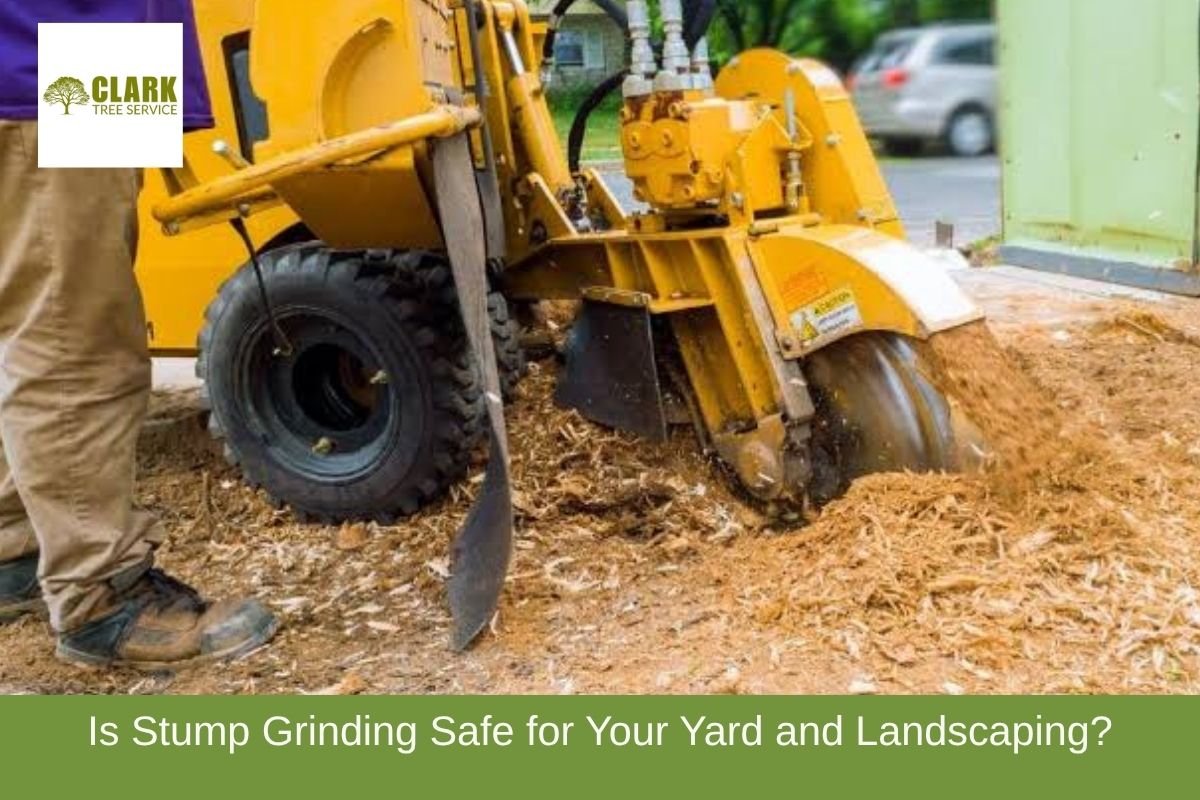
Stump grinding is a landscaping and tree-care process that uses a specialized machine with a rotating cutting wheel to grind a tree stump into small wood chips. Instead of pulling the entire stump and root system from the ground, the operator gradually cuts the stump below the surrounding soil level. Depending on the property’s future use, the stump may be ground several inches below grade. This approach makes the area easier to cover with soil, grass, mulch, or other landscaping materials. University extension guidance describes professional stump grinding as one of the quickest and safest ways to deal with an unwanted stump because it requires considerably less excavation than complete stump removal.
The grinding process usually begins with an inspection of the stump and its surroundings. A professional checks the stump’s size, location, accessibility, nearby structures, irrigation systems, landscaping features, and potential underground hazards. The operator then clears rocks, metal, branches, and other debris from around the stump before positioning the machine. During grinding, the cutting wheel moves across the stump repeatedly until the desired depth is reached. The resulting wood chips can then be removed or used as part of the cleanup process. However, homeowners should understand that stump grinding does not remove every underground root. Larger roots commonly remain and gradually decay beneath the soil.
Is Stump Grinding Safe for Your Lawn and Yard?
When performed correctly, stump grinding is generally safe for established lawns and surrounding yard areas. One major advantage is that the process is more localized than excavating an entire stump. Complete stump removal can require significant digging, which may disturb nearby soil, plants, irrigation systems, and hardscaping. Stump grinding typically concentrates the work around the existing stump, allowing the rest of the landscape to remain relatively undisturbed. This makes it a practical option when homeowners want to remove an obstacle without completely rebuilding the surrounding area. Still, the equipment is heavy, so access and ground conditions matter. Wet or muddy soil can be especially vulnerable to compaction from heavy machinery.
Professional planning also helps reduce accidental lawn damage. A qualified operator can choose an appropriate machine based on the stump’s location and the available access path. If equipment must travel across delicate lawn areas, protective boards or ground protection may help distribute its weight and reduce rutting or soil disturbance. The Royal Horticultural Society similarly recommends ground protection when heavy equipment needs to cross lawns during stump-related work. Therefore, homeowners should discuss access routes before the job begins rather than assuming the machine can simply be driven across the yard. A few minutes of planning can prevent unnecessary repairs later.
Can Stump Grinding Damage Nearby Plants and Landscaping?
One of the biggest concerns homeowners have is whether stump grinding will harm nearby shrubs, flower beds, trees, or decorative landscaping. The answer depends largely on the stump’s location and the size and position of its roots. Grinding equipment needs enough room to operate safely, and roots may extend beyond the visible stump. If another plant has roots growing close to the stump, aggressive excavation or careless grinding could disturb those roots. This is one reason professional assessment matters. The goal should not simply be to grind as deeply as possible; instead, the operator should select a grinding depth that meets the homeowner’s landscaping goals while limiting unnecessary disturbance.
Nearby hardscaping also deserves attention. Patios, retaining walls, walkways, fences, landscape edging, sprinkler heads, drainage components, and decorative features can all influence how the grinder approaches the stump. Flying wood chips and debris can also reach nearby property if appropriate barriers are not used. Safety guidance recommends removing rocks and other loose materials around the stump because they can damage equipment or become dangerous projectiles. A responsible stump grinding company should inspect the work zone, protect vulnerable features when necessary, and maintain a controlled operating area rather than treating the stump as an isolated object.
Why Underground Utilities Matter During Stump Grinding
Underground utilities are one of the most important safety considerations during stump grinding. Homeowners may know where their gas, water, electrical, sewer, or communication lines enter the house, but that does not always reveal their exact underground path. Irrigation pipes and low-voltage landscape wiring can also run close to tree stumps. Because stump grinding involves cutting below ground level, an unknown utility can create a serious safety and property-damage risk. Industry safety guidance specifically identifies contact with underground services as a potential stump grinder hazard.
Before grinding begins, the work area Therefore, before grinding begins, check the work area for buried utilities and other underground structures. Homeowners should also tell the contractor about private irrigation lines, landscape lighting, invisible fencing, drainage systems, or other installations that may not be identified through standard utility-location services. OSHA’s landscaping safety guidance emphasizes utility location as an important precaution for work involving potential underground hazards. This step may seem like a minor detail, but it can prevent major problems. A safe stump grinding project begins with knowing what exists both above and below the ground.
How Professional Stump Grinding Protects People and Property
Stump grinders are powerful machines, and their rotating cutting wheels can create serious hazards if operated improperly. The cutting process can throw wood chips, rocks, and other debris at significant distances. Operators can also face risks from moving machinery, excessive noise, vibration, dust, and unstable ground. For that reason, stump grinding should never be treated like an ordinary lawn-maintenance task. Professional operators should understand the equipment, follow manufacturer instructions, wear appropriate personal protective equipment, and establish a safe exclusion zone around the machine. Safety organizations and equipment guidance emphasize training, protective equipment, machine guards, and keeping bystanders away from the operating area.
Homeowners should take an active role in keeping the work zone safe. Children, pets, and visitors should stay well away from the grinding area while the equipment operates. Windows, vehicles, outdoor furniture, and other vulnerable property may also need protection from flying debris. Importantly, homeowners should not attempt to help guide or control a stump grinder unless they are properly trained and authorized to do so. A California workplace investigation documented a fatal incident involving unsafe interaction with a stump grinder and recommended proper operator training and consistent adherence to safety procedures. In short, professional stump grinding is safest when trained operators control the equipment, and everyone else stays outside the work zone.
Does Stump Grinding Affect Soil Quality?
Stump grinding can affect the soil around the former stump, especially when a large amount of wood material remains underground. Grinding produces a mixture of wood chips and sawdust that can temporarily change soil structure, moisture behavior, and nutrient balance. Iowa State University Extension notes that excessive wood shavings left in the grinding area can make it more difficult for new turf and plants to establish successfully. This does not mean stump grinding damages the soil permanently. Instead, it means the area should receive appropriate cleanup and soil preparation before homeowners install new landscaping.
The best approach depends on what you plan to do with the space. If the area will become part of a lawn, removing excess grinding debris and adding suitable topsoil can help create a better growing medium for grass. If you plan to install flowers, shrubs, or another tree, deeper grinding and proper soil replacement may be necessary. Guidance from the Royal Horticultural Society notes that grinding depth should reflect the future use of the area, with deeper grinding being useful when replanting or completing more substantial landscaping. Therefore, please inform your stump grinding contractor of your intended use for the area before the machine begins.
Can You Replant Grass or Landscaping After Stump Grinding?
Yes, stump grinding can prepare an area for new grass and landscaping, but proper restoration makes a significant difference. Once grinding is complete, the remaining wood chips should be managed according to the planned landscape use. For lawn repair, homeowners typically need to remove unsuitable debris, add quality soil, level the area, and then seed or install sod. Simply throwing grass seed over a large pile of fresh wood chips may produce disappointing results because the growing conditions are not ideal. Iowa State University Extension specifically recommends removing grinding material before adding topsoil and replanting the area.
For planting beds, the same principle applies. The area should be evaluated for remaining large roots, soil depth, drainage, and the needs of the plants you intend to install. If you want to plant another tree in approximately the same location, consider whether the old stump’s remaining roots and decaying material will interfere with the new tree’s establishment. In some situations, selecting a nearby planting location can provide better growing conditions. Meanwhile, if the area will become a walkway, patio, or other hardscape feature, the soil may require additional preparation and compaction suitable for that specific construction. Stump grinding is the first step—not always the final landscaping step.
How Stump Grinding Can Improve Yard Safety and Curb Appeal
An old stump may seem harmless, but it can become an inconvenient obstacle in an otherwise usable yard. Children can trip over exposed roots, homeowners can hit the stump with lawn equipment, and uneven ground can make mowing or walking more difficult. A decaying stump may also attract insects and provide shelter for wildlife. While not every stump needs immediate removal, homeowners should consider its location, condition, and potential impact on people and property. Iowa State University Extension notes that dead stumps can provide wildlife habitat, but they should be monitored if their stability creates a risk.
From an appearance standpoint, stump grinding can also give a property a cleaner, more finished look. Removing an unwanted stump opens possibilities for lawn expansion, new planting beds, mulch areas, walkways, or other landscape improvements. It can also eliminate a visual reminder of a tree that was removed because of storm damage, disease, or declining health. However, homeowners should think beyond appearance. If the old tree had a disease that could affect replacement plants, ask a qualified tree professional whether the remaining roots or planting location deserves additional consideration. A carefully planned stump grinding service can improve both the function and appearance of the landscape.
When Should You Hire a Professional Stump Grinding Service?
DIY stump grinding may appear attractive when homeowners see rental equipment at local stores, but operating a stump grinder requires more than simply knowing how to start the machine. The equipment contains a high-speed cutting wheel capable of throwing debris and causing severe injury. Operators must understand machine controls, emergency procedures, safe positioning, work-zone protection, and the characteristics of the property. University and safety guidance consistently recommends training and appropriate protective equipment for stump grinder operation. For many homeowners, hiring a trained professional is the safer and more practical choice.
Professional service becomes particularly valuable when the stump is close to buildings, fences, utility lines, retaining walls, irrigation systems, sidewalks, or valuable landscaping. Challenging slopes, limited gate access, large stumps, and extensive surface roots can also make the project more complicated. A professional can evaluate these conditions before choosing an equipment setup and grinding strategy. Rather than focusing only on the price of grinding, homeowners should consider the potential cost of repairing a damaged sprinkler system, lawn, hardscape, or utility. A properly planned stump grinding service can save time, reduce property risks, and leave the area ready for its next landscaping purpose.
What Should You Do After Stump Grinding?
The work does not necessarily end when the stump disappears. Once the grinder leaves, inspect the area and determine whether additional cleanup or landscape restoration is needed. Depending on your agreement with the contractor, the grinding debris may be removed or left on-site. If you plan to install grass or plants, excessive wood material should generally be cleared before adding appropriate soil. The final surface should also be leveled so that it does not create a depression or uneven area that collects water. Proper restoration helps the yard transition smoothly from stump removal to its next use.
Give the area time to settle as needed, particularly if a large stump created a substantial amount of grinding material. Monitor the location for sinking, new shoots, drainage problems, or unexpected plant growth. Some tree species can produce new shoots from surviving lateral roots, meaning grinding alone may not completely prevent regrowth in every situation. If you plan a major landscape renovation, consider combining stump grinding with grading, topsoil installation, lawn installation, planting, or other appropriate services. By treating the project as part of the larger landscape plan, you can achieve a more attractive and functional result instead of simply hiding the old stump.
Make Stump Grinding Safer With Smart Planning
The safest stump grinding projects begin before the equipment arrives. Start by identifying the exact stump and explaining your plans for the area. Tell the contractor about irrigation lines, landscape lighting, invisible fencing, drainage features, underground structures, nearby plants, and hardscape elements. Then discuss the desired grinding depth and whether you want the wood chips removed. These details allow the contractor to plan the job around the property’s specific needs rather than applying the same approach to every stump.
Next, make sure children and pets stay away from the work area, move fragile outdoor items when necessary, and provide a clear access path for the equipment. If the ground is soft or wet, discuss whether delaying the project or using ground protection would reduce landscape damage. Heavy equipment can compact vulnerable soil, so weather and site conditions deserve attention. Finally, choose a company that demonstrates knowledge of equipment safety, property protection, and tree-care practices. A low-cost service is not necessarily the best value if poor planning leads to damaged landscaping or repairs.
Wrap-Up: Is Stump Grinding Safe for Your Landscape?
Stump grinding is generally a safe and efficient way to improve a yard when trained professionals use the right equipment and follow proper safety practices. Unlike complete stump excavation, grinding usually limits soil disturbance while removing the visible stump and major surface roots. However, the process still requires careful planning because machinery can throw debris, compact soil, disturb nearby roots, and potentially encounter underground utilities.
The safest approach is to evaluate the entire work area before grinding begins. Identify utilities and irrigation lines, protect nearby landscaping, choose the appropriate grinding depth, and plan for post-grinding soil restoration. Also, consider what you want to do with the space afterward. Whether you plan to install grass, create a planting bed, expand a walkway, or simply improve curb appeal, proper preparation will produce better results. Ultimately, professional stump grinding can remove an unwanted obstacle while preserving the surrounding landscape and giving you a clean starting point for your next outdoor improvement.
Frequently Asked Questions
1. Does stump grinding damage the lawn?
Stump grinding can disturb a small area of lawn, particularly around the stump and along the equipment’s access route. However, professional operators can minimize damage by selecting suitable equipment, protecting vulnerable surfaces, and avoiding unnecessarily wet or soft soil. Afterward, the area can usually be restored with quality topsoil and grass seed or sod.
2. Will stump grinding remove all the tree roots?
No. Stump grinding primarily removes the stump and larger surface roots to a planned depth. Many deeper and lateral roots remain underground and gradually decay. Some tree species may also produce new growth from surviving roots, so grinding does not always guarantee complete root-system elimination.
3. Can I plant grass after stump grinding?
Yes. However, you should properly prepare the area first. Remove excessive grinding debris, add suitable topsoil, level the surface, and then seed or install sod. Fresh wood chips can affect soil conditions, so simply spreading grass seed directly over a large pile of grinding material may not provide good results.
4. Is it better to grind a stump or remove it completely?
It depends on your landscaping plans. Stump grinding is usually faster and less disruptive because it does not require removing the entire root system. Complete removal may make more sense when you need to excavate the entire area for construction or when extensive root removal is important. A professional can recommend the better option based on the stump’s location and your plans.